
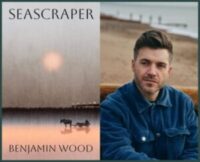
Shortlist Spotlight: Benjamin Wood
9th June, 2026
Our final Shortlist Spotlight is on Benjamin Wood, author of Seascraper. In this exclusive Q&A, he tells us about the origins and settings of his novel.
Q: How do you feel about being shortlisted for the Walter Scott Prize for Historical Fiction? Do you consider yourself an historical novelist?
A: I feel immensely proud and grateful to be on this shortlist. Since its inception, the Walter Scott Prize has recognised the work of so many authors I revere, and it’s a real privilege to be part of it this year. I’m more than happy to be viewed as historical novelist. Seascraper is my fifth novel, and none of my previous books has been set in contemporary times—or not primarily, at least—so it’s true to say that I’ve always been drawn to writing about characters in the past above those in the current moment. But I try not to think about genre classifications or terms like this when I’m working on a novel, as they can restrict its narrative possibilities.
Q: How did the people and times you write about in this novel first lodge in your imagination?
A: I grew up in Southport on the northwest coast, where the sea is famously withdrawn. It has the second-longest pier in Britain but most days you could walk to the end of it without seeing any water at all. I was compelled by the thought that I might build the story of a character whose livelihood depends on the patterns of that sort of tide, who has to walk for miles every day just to reach the shallows. So I started to do some research into the local industries, and this lead me to discovering a lot about the shrimpers who used to thrive there.
Q: What place does research have in your writing? When does the fiction take over from the facts?
A: I like to feed my creativity with facts then let my imagination project itself into the gaps of what I’ve learned. Which means soaking up as lot of information from books or archives or from doing fieldwork and then trying very hard to filter out what isn’t directly relevant to the story. I aim to give the narrative voice as much verisimilitude as I can—in relation to the period, the setting, the occupational concerns of the protagonist, etc—but conveying its dramatic atmosphere is what’s most important to me, so I let that guide me as much as possible.
Q: Can writing about the past help us to deal with the present and think about the future?
A: Of course. The past is where life’s mistakes have already have been made and where all its successes were delivered or rooted. Most of my time as a novelist is spent re-examining the past in some form—whether it’s dismantling my own memories and reshaping them on the page so I can understand them better, or reanimating moments from the lives of others. The past is where I live most of a given year, I’d say.
Benjamin will be appearing at the Walter Scott Prize event at the Borders Book Festival on 11th June – tickets still available here.